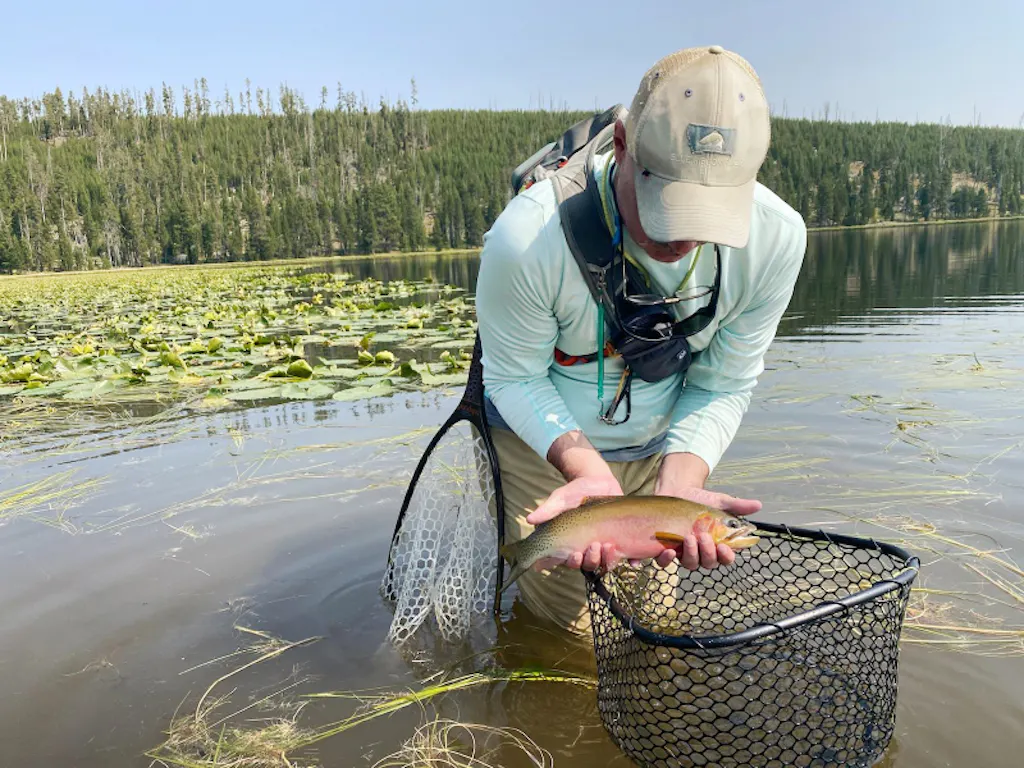
Float trip brown trout ready for release. Caught on the "Mystery Ramp" to Point of Rocks (Yankee Jim Canyon) Float. Photo by Nick Roberts
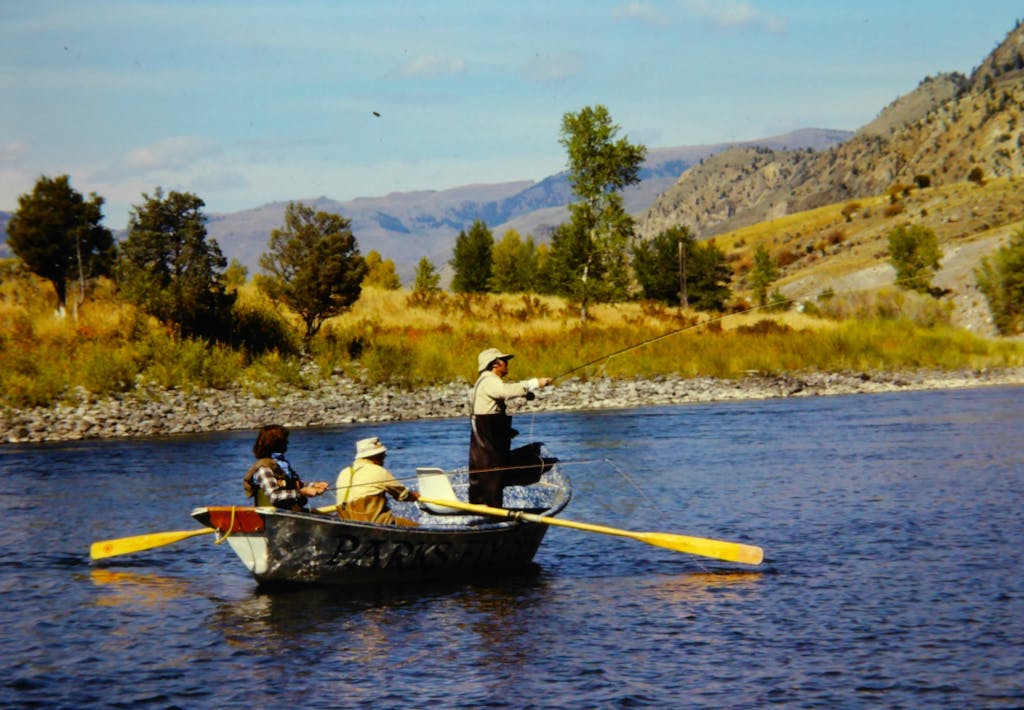
Parks' Fly Shop began running guided float trips in 1955, utilizing a war-surplus rubber raft that had apparently earned several Purple Hearts during its service, based on the number of leaks. We run guided drift boat trips on the blue ribbon portion of the Yellowstone River between Gardiner and Columbus, including the glorious Yankee Jim Canyon. When the Yellowstone is out of shape due to the spring runoff or summer thundershowers, our team of contract outfitters can introduce you to the mighty Madison, primarily the lower river below Beartrap Canyon.
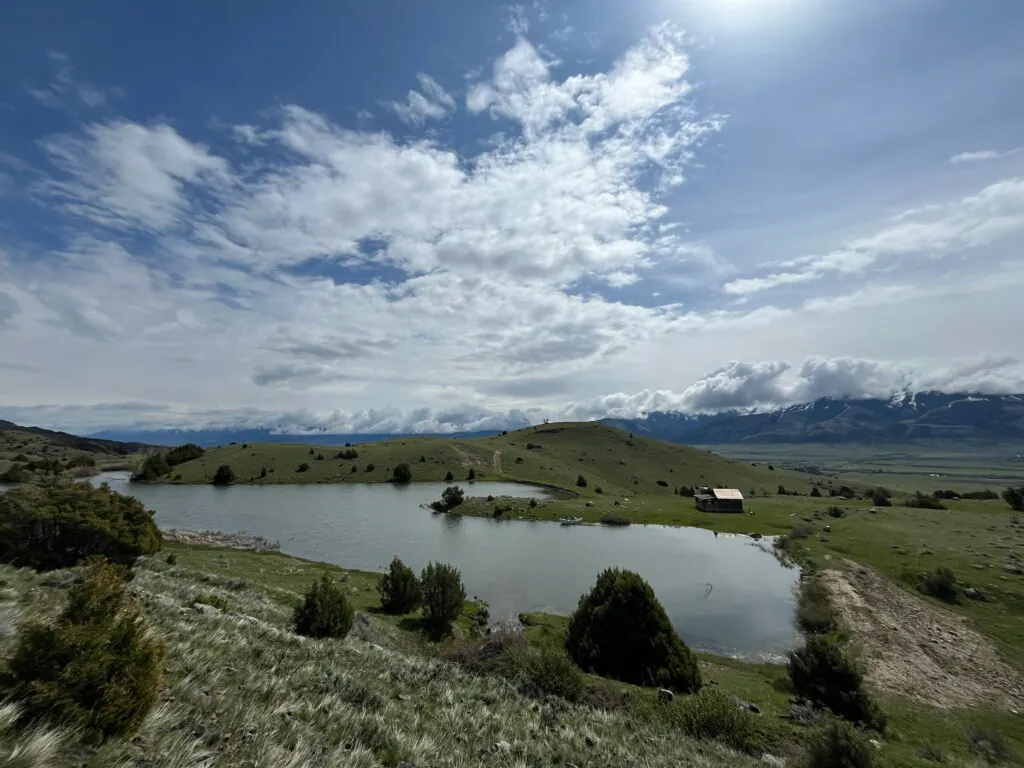
Our lake floats are discussed seperately. For more information on floating the Yellowstone, read on.
| River Float Trip Rates | ||
|---|---|---|
| Full-Day | Half-Day | |
| One Angler | $410 | $310 |
| Two Anglers | $440 | $345 |
| Shoulder Season** | $375 | Not Available |

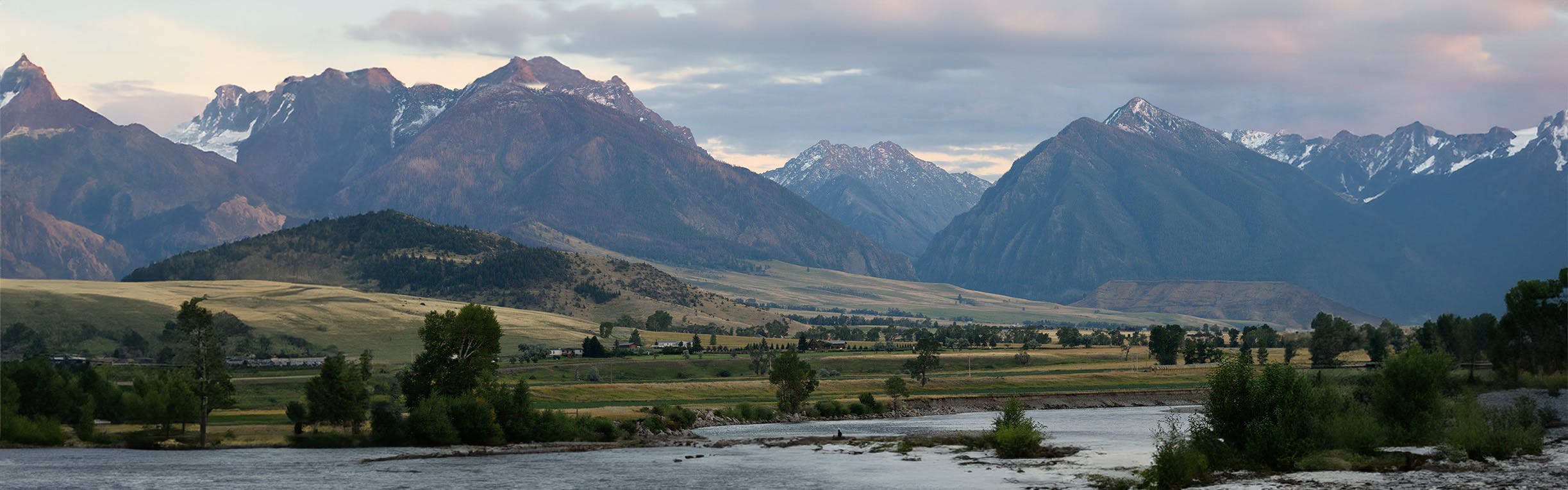
Our shop is located a hundred yards from the Yellowstone River and only two miles from the first drift boat access. When running one of the upper floats near Gardiner, we are often the first boat on and the last boat off, while if our float takes us a considerable distance from Gardiner, it's best to make late dinner plans as we often get back to Gardiner as late as 8:00PM. The Yellowstone is one of the most famous rivers on Earth, for good reason. In terms of variety of angling opportunities, quality, and the landscape through which it flows, the Yellowstone is unparalleled.
Depending on time of year and stretch floated, the Yellowstone has something to offer for every angler, whether you're interested in catching a lot of cutthroat trout on big attractor dry flies or hoping for one real monster on a streamer. In general, we focus on the upper river near Gardiner for numbers of fish and when dry fly fishing is key, and go further downstream when looking for big daddies.
The Yellowstone has different things to offer and fishes differently depending on the season. Read on for details on how we fish it on guide trips in spring, summer, and fall. You can click the season to jump straight to descriptions of the fishing and where we guide during each period.

Above: some streamers we like in the spring. Below: a brown trout that felt the same way about the black one on the Pine Creek-9th Street float.

Our float season on the Yellowstone begins in the middle of March, when longer days and warmer water make good fishing more likely to last most of the day rather than just a couple hours. The early season, from the beginning of the guide season until runoff dirties the river in early May, is something of a sleeper bet, and offers uncrowded conditions, usually comfortable weather as long as you remember a spare layer and a raincoat, excellent streamer and nymph fishing, Blue-winged Olive (Baetis)and March Brown mayflies and midges for match the hatch dry fly action, and in late April or early May, the Mother's Day Caddis hatch, one of two challengers for the title of "Epic Hatch of the Year" (the other challenger is the summer Salmonfly). Depending on river flows and what you'd like to do, in the spring we either float a long stretch and bypass some less productive stretches or fish a short float very thoroughly, getting out to fish the best sections on foot, so waders are required.
Spring is a good time of year for those seeking to escape the crowds, especially if you have a couple days on which a float might work, in case cold and snow or an early surge of spring runoff forces us to reschedule. It is also a good bet if you want to fish "meat" for big fish, since the larger trout are aggressive for streamers and large nymphs after a tough winter. All spring floats are eligible for our shoulder season rate.
Below: a fine spring rainbow-cutthroat hybrid, caught on the McConnell-Yankee Jim float.


Above: A typical "town section football." Carters-89 float (through Livingston).
Below: Guide Mike Leach with a solid brown. That thing in its mouth is a size-4 dry fly. No need to squint to see your fly on early summer floats! Bottom: a nice summer rainbow. Emigrant-Mallard's Rest float.


90% of the Yellowstone's float pressure occurs in the summer, and if you're making your first visit to the region or love attractor and terrestrial dry fly fishing, this is when you should come, too. Try to book early, though. In July and August 2010 we were fully booked almost every day.
Immediately after runoff recedes in late June or early July, the trout go on a subsurface feeding binge, seeking out Golden Stonefly and Salmonfly nymphs. The famed emergence of these bird-sized bugs is one of the most anticipated events of the angling year, and is a time when some of the largest trout in the river will rise to dry flies. As the Salmonflies and Golden Stones taper off, many species of caddis and small stoneflies begin hatching, making it possible for our clients to fish dry flies almost exclusively for much of the summer.
For the dry fly angler, midsummer is Nirvana. As the grass begins to turn gold, natural insect hatches begin to fade and the trout turn increasingly towards terrestrial food sources: grasshoppers. While the wind can make casting a challenge, few things beat the explosive rise of a rainbow or cutthroat, or better yet, the gentle sip of a 20-inch brown taking a two-inch grasshopper imitation like a smaller trout would take a half-inch mayfly. The weather is usually quite comfortable and most of the time we leave the waders at home and wet wade getting in and out of the boat. Since flows are high and the trout concentrate tight to the banks (and the bushes), we tend to float 10-12 miles every day and do almost all our fishing from the boat.
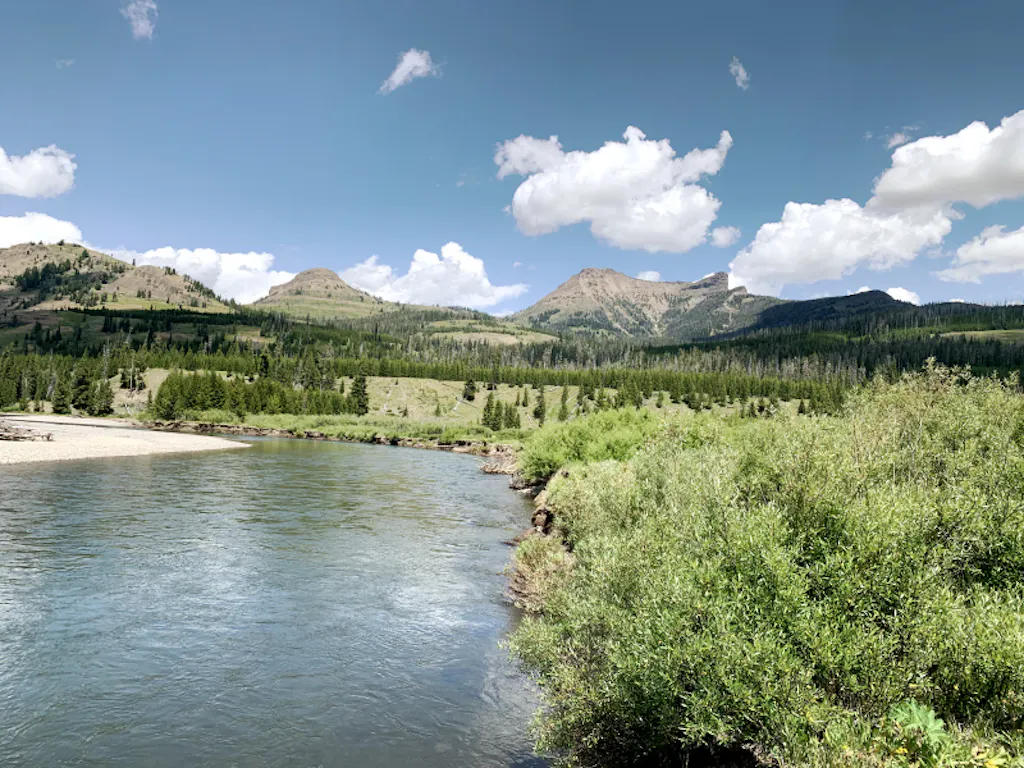
Beginning sometime in August, flows through Yankee Jim Canyon drop enough to make drift boat fishing reasonable. As one of the few outfitters to run this section of the river in drift boats, we'd love to introduce you to this beautiful, rugged section of river where the trout love taking dries especially well.
As noted above, summer is the peak of dry fly fishing on our floats and is the most popular time to float the river. It also offers the most consistent fishing in general, though chances for gigantic fish probably aren't as good as in spring and fall. Conditions are usually pleasant, though the occasional summer thunderstorm can make some stretches unfishable for a day or two. Except in Yankee Jim Canyon it's hard to avoid competition from other boats and some wading anglers, but the Yellowstone only gets truly "crowded" on rare summer days and during the Salmon Fly hatch, and even at the peak of the season your back cast is more likely to hit a whitewater boat or a pleasure floater than another guided drift boat.
All summer trips fall under our standard rates, and we encourage you to book as early as possible, especially if you have a large group, wish to request a specific guide, or are booking several days in a row.
Below: Big Daddy Brown that ate a hopper on the Emigrant-Mallards float.
Above: the fight. Below: the payoff. Photos by Josh Garris of Curtis-Wright Outfitters, a NC shop that sends a big group out to fish with us every season. Bottom: rainbow that took a Hecuba dry right at the Carter's Bridge ramp.

Sometime between August 20 and Labor Day, the Yellowstone begins to change, becoming lower and clearer, with an increase in mayfly activity. Instead of banging the banks, we often run a bit farther out and fish broader riffles and other structure. The trout start getting suspicious about the larger, normal grasshopper patterns and attractor dries, and start wanting smaller flies and often stranger ones -pink grasshoppers and purple mayfly imitations in 2009 and 2010, for example.
At some point in late August or early September comes the first taste of cold weather, with clouds spitting drizzle and daytime highs in the high 40s or low 50s. With this weather come the first fall Gray Baetis (Fall Blue-winged Olive) mayflies, which typically bring large numbers of selectively rising trout to the surface. As fall progresses, hatches of this insect become more and more consistent, so that by late September we're fishing Baetis imitations almost every day. At times they are joined by the larger Hecuba, or Fall Drake. By late October the Blue-winged Olives begin to grow somewhat less common, but they continue along with midges until our guide season ends in early November.
Starting in late September or early October the hardcore streamer bite comes back after languishing somewhat through the summer. With the brown trout and some rainbows preparing to spawn, and the rest of the rainbows and the cutthroats fattening up for the tough winter, ripping big flies out of the boat or swinging them slowly through the longer pools can produce some exceptional fish. The fishing for fall run browns gets steadily better through October, though fewer and fewer anglers are around to target them. Often in late September and October we'll strip streamers in the morning, hoping for a bruiser, then fish dries after lunch.
As in the spring, we either float a long stretch in the fall and skip some less-productive sections or fish a short section of river very thoroughly, including fishing most of the productive riffle corners on foot. In the autumns of wet years it is more likely we'll float a long stretch, while in dry years lower river flows usually mean it's better to float a short run rather than push through a long stretch. Yankee Jim Canyon usually remains fishable until sometime between Labor Day and the tenth of October, and by the autumnal equinox the number of guide boats and general fishing traffic on the river have dropped off to levels only slightly higher than in the spring, making the fall another great time to float the Yellowstone if you like solitude. There's also the added bonus of cottonwoods in their autumn color, with the backdrop of the first snows on the mountains.
We remain quite heavily booked for Yellowstone floats through September, so it's best to book September trips as early as you can. Things thin out through October, meaning that we can usually set you up on short notice even if you have a large party requiring multiple boats. Trips until mid-October fall under our normal rates, while those after October 15 fall under shoulder season rates.
Notice the nymph color? Purple is a great choice in the fall.
That's a #8 nymph, to give you an idea of the fish size.

Design and (most) content by Walter Wiese
COPYRIGHT NOTICE: All content copyright Parks' Fly Shop, Walter Wiese, or the content creator. Downloading, reposting, sharing, or otherwise copying text, photos, videos, or any other content is permitted for noncommercial use. If content is reposted elsewhere online (i.e. blogs), please attribute content to its creator, if known, or to Parks' Fly Shop, and provide a link to this site. If content is used in an offline environment (i.e. club meetings), please provide attribution and note our URL. All other rights reserved. Entities making commercial use of or otherwise attempting to profit by the contents of this site without our permission will be prosecuted.